 ICECTE 2026
Talk Title: Shaping a Smarter Future Through Extended Reality (XR): Key Trends, Technical Challenges, and Pathways Forward
Abstract: Extended Reality (XR), an umbrella term for virtual, augmented, and mixed reality, has rapidly evolved into a transformative computing paradigm with the potential to reshape how people learn, work, communicate, and interact. As XR technologies mature, they are increasingly integrated into applications ranging from next-generation training and education to remote collaboration, healthcare, and human–machine interaction. Yet, despite this progress, realizing XR’s full promise requires addressing critical technical, human-centered, and scalability challenges. This presentation will highlight the key trends shaping the evolution of XR, including advancements in sensing, perception, multisensory feedback, and AI-driven personalization. Drawing from emerging research, including adaptive and multimodal feedback systems that enhance user performance, this presentation will outline concrete pathways for building more robust, generalizable, intelligent, and impactful XR systems. By examining both current capabilities and future possibilities, this presentation aims to provide researchers, practitioners, and industry partners with a roadmap for shaping a smarter, more connected world through XR technologies.
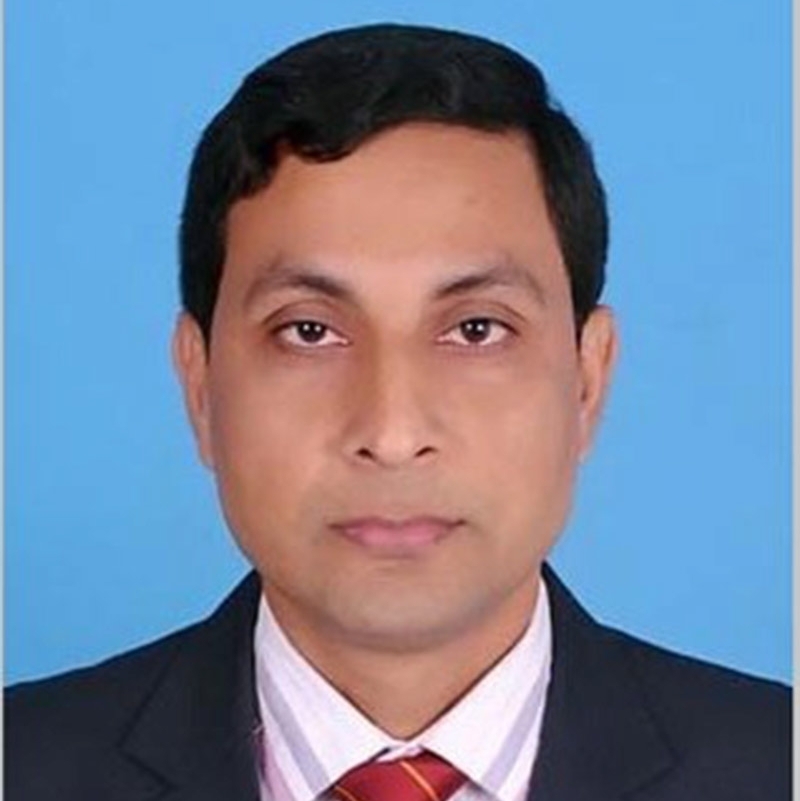
Short Biography: M. Rasel Mahmud is an Assistant Professor of Computer Science and Director of the eXtended Reality and intelligence (XRei) Lab at Kennesaw State University. He received his PhD in Computer Science from the University of Texas at San Antonio, USA, MS in Computer Science from the University of South Dakota, USA, and BSc. in Computer Science & Engineering from Rajshahi University of Engineering & Technology, Bangladesh. His research lies at the intersection of extended reality (XR), human-centered computing, and artificial intelligence, with a focus on XR applications in healthcare, accessibility, safety, privacy, and security. Dr. Mahmud’s research work is supported by the U.S. National Science Foundation (NSF), including a prestigious NSF Medium Grant. His research has been published in premier venues, including IEEE Transactions on Visualization and Computer Graphics (TVCG), IEEE VR, IEEE ISMAR, ACM VRST, and ACM ASSETS, earning recognition, including an Honorable Mention Award.
Talk Title: Chipless Techniques in RF Identification and Sensing: State-of-the-Art and Beyond
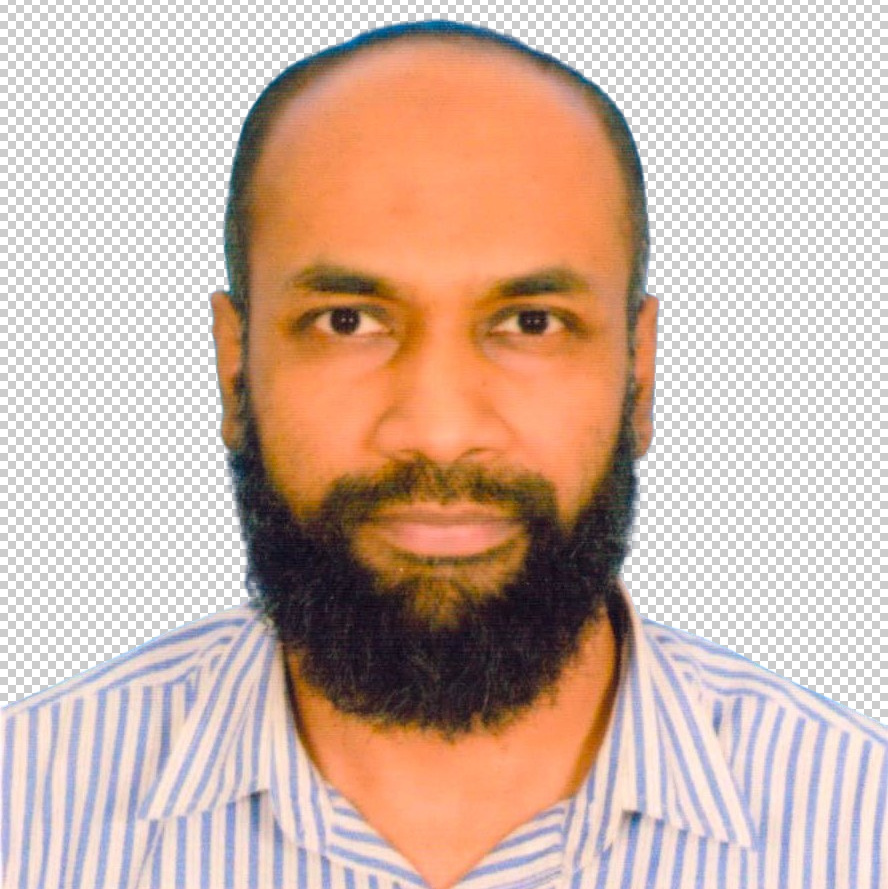
Abstract: Chipless radio frequency identification (RFID) has emerged as a promising alternative to conventional chipped RFID by eliminating integrated circuits, thereby enabling ultra-low-cost, passive, and robust identification and sensing solutions. By exploiting electromagnetic scattering mechanisms, resonant structures, and spectral or time-domain encoding, chipless techniques offer unique opportunities for large-scale deployment in harsh environments and resource-constrained applications. Beyond identification, recent advances have demonstrated the capability of chipless RFID to function as multi-parameter sensors, supporting applications in structural health monitoring, smart agriculture, biomedical sensing, and the Internet of Things (IoT). This talk presents a comprehensive overview of the state-of-the-art in chipless RF identification and sensing technologies, covering key design principles, encoding strategies, sensing mechanisms, and reader architectures. Critical challenges—including limited read range, coding capacity, sensitivity, mutual coupling, and lack of standardisation—are discussed with reference to recent research trends. The talk concludes by exploring future research directions beyond current implementations, highlighting the role of advanced materials, compact readers, machine learning-assisted signal processing, and integration with next-generation wireless systems. The session aims to provide students and researchers with both a solid foundation and a forward-looking perspective on the evolving landscape of chipless RF identification and sensing.
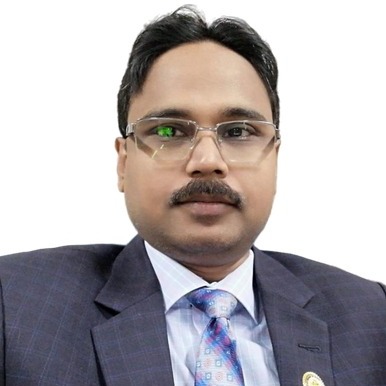
Short Biography: DR. A. K. M. ZAKIR HOSSAIN (SMIEEE, MIET) received the B.Sc. degree from Rajshahi University of Engineering and Technology (RUET), Bangladesh, in 2007, the master’s degree in electronics/telecommunications from the University of Gavle, Gavle, Sweden, in 2013, and the Ph.D. degree in engineering from International Islamic University Malaysia (IIUM), Kuala Lumpur, Malaysia, in 2017. He is currently a Senior Lecturer with the Fakulti Teknologi dan Kejuruteraan Elektronik dan Komputer, Universiti Teknikal Malaysia Melaka (UTeM), Malacca, Malaysia. He was a Postdoctoral Research Fellow with IIUM, from 2018 to 2019. He is also serving as the Deputy head of the Microwave Research Group (MRG) in the Centre for Telecommunication Research and Innovation (CeTRI) in UTeM. He has authored and co-authored more than 75 peer-reviewed journal articles and conference papers and has secured around RM 300,000 in research funding through various competitive grants. His current research interests include microwave passive devices, chipless RFID technology, microwave passive sensors, MIMO antennas, and 5G mobile communication. He is a Certified Engineering Technologist with the Board of Engineers Malaysia (BEM), a member of the International Association of Engineers (IAENG) and the IEEE Society, a Full Member of the Institution of Engineering and Technology (IET), and a Graduate Technologist with Malaysian Board of Technologists (MBOT). He serves as a reviewer for several reputed journals, including those published by IEEE Transactions, Elsevier, Springer and others.
Talk Title: Fabrication of Stable Sn and Sn-Pb Based Perovskite Solar Cells: Additive and Device Engineering
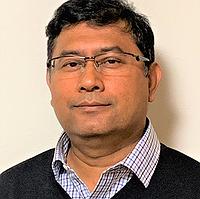
Abstract: In recent years, lead (Pb) halide perovskite solar cells (Pb-PSCs) with certified power conversion efficiencies (PCEs) of 27.3% are a possible alternative to conventional silicon-based solar cells for a sustainable future [1]. Nevertheless, the practical application and commercialization of Pb-PSCs has faced challenges due to worries regarding possible health and safety risks associated with the presence of the heavy metal element Pb. Researchers are focusing the partially or fully replace the Pb elements from perovskite composition without compromising the performance and stability of PSCs. To fabricate the lead-free tin (Sn) perovskite or partially replaced Pb with Sn called Sn-Pb PSCs are suffering from the facile Sn2+ oxidation, low-quality film, high p-type doping behavior, and defect state density [2, 3]. The unwanted oxidation of Sn2+ and interfacial defect limits the PCE and boosts the deterioration of the PSCs throughout a cyclic degradation process. To solve those problems, we introduced additives engineering process in the precursor solution and interfaces of Sn-based and Pb-Sn-based PSCs and fabricated PSCs with p-i-n structure. Additive engineering in the precursor solution and interface helps to control the precursor solution quality, slow down the crystallization process, improve the crystal quality, suppress defects density, and overall enhance the PSC's performance [4, 5]. To date, we have achieved PCE over 14% for Sn-PSCs and PCE over 23% for Sn-Pb PSCs. More importantly, the encapsulation PSCs have shown better stability under maximum power point tracking (MPPT) for both PSCs.
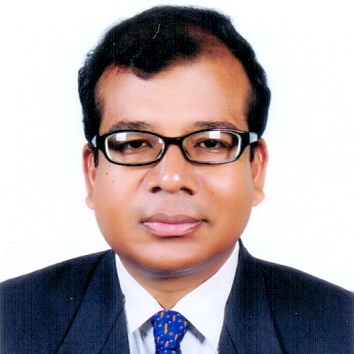
Short Biography: Ashraful Islam is a chief researcher at the National Institute for Materials Science (NIMS). He received his Ph.D. degree from Osaka University in 1998. Before joining the NIMS, in 2008, he was a research fellow at National Institute of Advanced Industrial Science and Technology (AIST), Japan (1998-2002) and a senior researcher at Sharp corporation (2002-2008). He has over 25 years’ research experience in solar cells include new cell structures and intelligent materials development of dye-sensitized solar cell (DSCs) and Perovskite solar cell (PSC). According to the Web of Science in 2019, he is one of the most highly cited researchers with over 225 publications, 18250 citation and h-index 58.
| Important Dates |
|---|
| Paper Submission Deadline: |
| Paper Acceptance Notification: |
| Camera Ready Paper Submission: |
| Registration Deadline: |
| Conference Dates: 29–31 January, 2026 |